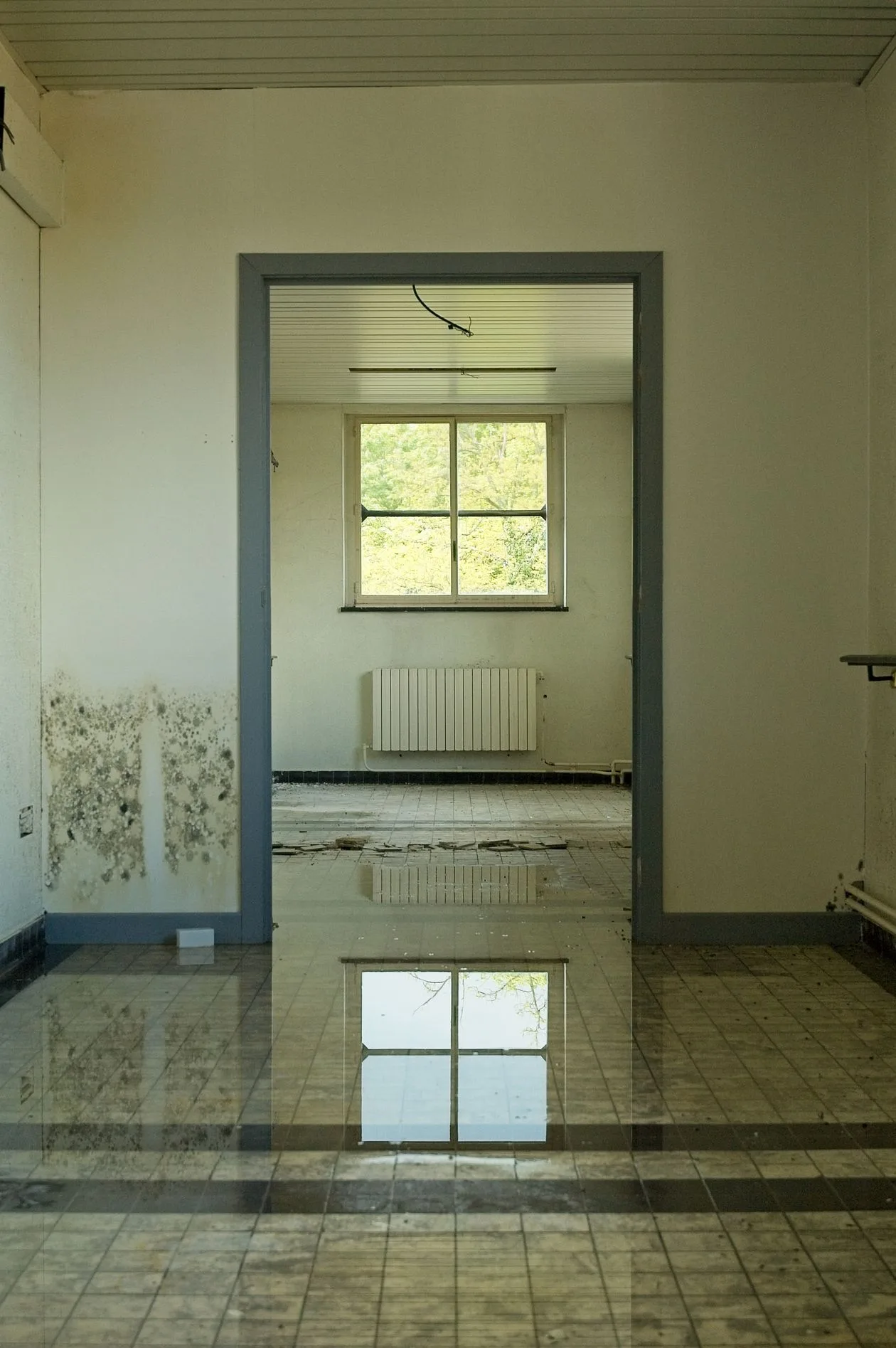
Waterlogged drywall ceilings sag and fall — often hours after the break, long after you think the danger passed.
Water Damage Gwinnett · Gwinnett County, Georgia
Burst Pipe in Your Gwinnett Home? Shut the Water Off, Then Call
A burst supply line can flood a home in minutes. Here is what to do in the first five minutes — and how Water Damage Gwinnett connects you with local water extraction and structural drying professionals across Gwinnett County.
Call now: (678) 833-0791
You’ll be connected with a local restoration provider.
First priorityShut off the main water valve
Next stepCut power near standing water
ThenCall — pros extract and dry
What a Burst Pipe Does to a Home
A 3/4-inch supply line at normal pressure can release hundreds of gallons per hour. The damage compounds every minute the water flows.
Insulation and drywall wick water upward; what looks dry on the surface hides soaked cavities behind it.
Hardwood cups and buckles, carpet padding acts as a sponge, and subfloors swell — flooring is usually the first visible casualty.
Water and wiring don’t mix — breakers trip, outlets short, and wading through water near live circuits is dangerous until power is cut.
The U.S. EPA says: “It is important to dry water-damaged areas and items within 24-48 hours to prevent mold growth.” Thoroughly extracting the water and drying the structure is what keeps a burst pipe from turning into a mold remediation too.
The pipe repair is the cheap part; the water damage is the expensive part. Minutes of flowing water are what drive the cost — which is why the shutoff comes first.
First five minutes
Burst Pipe: Three First Moves
- Shut off the main.Find your main water valve — often near the street meter or where the line enters the house — and turn it off. Can’t find it? Call and the pro will talk you through it.
- Cut electricity near water.If water is near outlets, appliances, or the breaker panel, shut off power at the breaker. Never touch electrical with wet hands or while standing in water.
- Call (678) 833-0791.You’ll be connected with a local restoration provider. Tell them where the break is and whether water is still flowing.
Local risk profile
Why Burst Pipes Hit Georgia Homes
Georgia freezes rarely — which is why its plumbing freezes badly. These are the failure patterns behind most burst-pipe calls across Gwinnett County. Pipe frozen but not leaking yet? See frozen pipe help. Water coming through a ceiling? See ceiling leaks.
A single hard freeze bursts pipes in attics and crawlspaces — Georgia’s once-or-twice-a-winter event that does most of the damage.
Supply lines routed through unconditioned attics freeze first — the most common burst location in Georgia homes.
Kitchen and bath supply lines inside outside walls sit between cold and warm — the classic split-pipe location.
Corroded pipe walls thin from the inside for years, then fail under perfectly normal pressure.
Excess municipal pressure stresses joints and weak spots — the silent accelerator behind many failures.
No heat plus no water movement equals the highest burst risk of all — winterization is what protects empty houses.
When a burst pipe floods a home in Gwinnett County, Water Damage Gwinnett routes the call to an independent local water damage restoration contractor — the contractor extracts, dries and verifies.
What happens after the call
From Shutoff to Verified Dry: The 5-Step Process
Every burst-pipe job is different, but professional restoration follows the same sequence. These steps are performed by the independent contractor your call is routed to.
The pro confirms the break is isolated and the water is off — no drying starts while water still flows.
Truck-mounted pumps and vacuums remove standing water — the step that stops the damage from compounding.
Unsalvageable drywall, insulation, carpet padding, and flooring come out — they can’t be dried in place.
Dehumidifiers and air movers dry framing and subfloor to verified moisture levels — not guesses.
Antimicrobial treatment and final moisture readings confirm the structure is dry and ready for rebuild.
Burst Pipe Help in Gwinnett County Starts With Three Clear Answers
- Is water actively flowing and you can’t stop it?
- Is a ceiling bulging, or is water near electrical?
- Are floors buckling or walls already soaked?
Straight answers
Burst Pipe FAQs: Gwinnett County, Georgia
Common questions from homeowners across Gwinnett County — answered plainly.
What should I do first when a pipe bursts?
Shut off the main water valve immediately — it is usually near the street meter or where the water line enters the house. Then cut power to any area with standing water, and call (678) 833-0791 to be connected with a local restoration provider.
How much water can a burst pipe release?
A 3/4-inch supply line at typical residential pressure can release hundreds of gallons per hour. That is why the shutoff matters more than anything else in the first minutes — every minute of flow multiplies the damage.
Can I repair a burst pipe myself?
Pipe repair is a plumber’s job; water extraction and structural drying is a restoration pro’s job. This page connects you with restoration professionals for the water damage — a licensed plumber handles the pipe itself.
Will my ceiling collapse?
Waterlogged drywall ceilings can sag and fall, sometimes hours after the water stops. Do not stand under a bulging ceiling, and keep the room clear until a professional assesses it.
Does homeowners insurance cover burst pipe damage?
Sudden burst pipes are commonly covered; slow leaks that went unaddressed often are not. Document everything with photos and ask your insurer — the insurer, not the contractor, decides what is covered.
Local notes: Snellville’s 1960s–80s ranch homes run on aging galvanized and copper supply lines, while newer subdivisions in Dacula and Buford rely on builder-grade valves and hoses — both common sources of sudden leaks covered on those pages.
Related services
More Ways We Connect Gwinnett Homeowners
Why pipes burst — materials, freezing physics, and prevention.
Basement water extraction and structural drying.
When burst-pipe water sits, mold follows — routed to local pros.
Service and routing disclosure
Water Damage Gwinnett is a referral and call-routing experience, not a restoration contractor. A connected caller may be referred to an independent service provider. Service availability, response times, pricing, licensing and insurance are determined by the provider.